
Pete Sabine PETE SABINE & LESLIE WHITNEY
  • ABOUT OUR TEAM
    • About Pete Sabine
    • Hire the Right Realtor
  • BUYING
    • Consultation and Preparation
    • Home Loan Resources
    • Finding Your Next Home
    • Transaction Management
    • Home Purchase Questionnaire
  • SELLING
    • CONSULTATION AND PREPARATION
    • PREMARKET PREP
    • PRICING STRATEGY
    • MARKETING PROGRAM
    • VIDEO MARKETING >
      • LIFE STYLE VIDEOS
    • STAGING
    • MARKETING UPDATE REPORTS
    • HOME SALE QUESTIONNAIRE
  • COMMUNITIES
    • ABOUT ALAMO
    • ABOUT ALHAMBRA VALLEY
    • ABOUT CLAYTON
    • ABOUT CONCORD
    • ABOUT DANVILLE
    • ABOUT LAFAYETTE
    • ABOUT LAMORINDA
    • ABOUT MARTINEZ
    • ABOUT MORAGA
    • ABOUT ORINDA
    • ABOUT PLEASANT HILL
    • ABOUT SAN RAMON
    • ABOUT WALNUT CREEK
    • COMMUNITY EVENTS >
      • National Night Out
      • Pleasant Hill Blues & Brews Festival
      • Pleasant Hill Summer Concert Series
      • Lindsey Wildlife Experience
      • CHRISTMAS HOLIDAY FUNDRAISER
      • Community Yard Sale Event
      • Home Buying Seminar
  • TIPS & TOOLS
    • REAL ESTATE PRO TIPS
    • Service Provider Directory
    • How to buy/sell book
  • CONTACT US

SALE OF A HOME SUBJECT TO A SOLAR AGREEMENT

8/24/2023

0 Comments

 
Picture
The solar industry is booming. As of 2019, there were more than 2 million residential solar installations in the U.S., and that number is projected to double by 2023. 

One way builders and homeowners are looking to install solar systems is through a lease or power purchase agreement (PPA) (i.e., a “solar agreement”) with a third-party solar provider. But solar agreements are known to create unique challenges when selling a home.

If you own a home with a solar agreement, your Realtor may be able to help you navigate potential complications with the sale.

SOME ISSUES THAT SELLERS MAY EXPERIENCE INCLUDE:
  • Buyers shying away from a house because of the solar agreement (due to things like term, payment, maintenance considerations, technology obsolescence and more)
  • Buyers who may not meet the solar company’s qualifications
  • Potential issues involving the proper transfer of the solar agreement

5 TIPS FOR A SMOOTH CLOSING
START EARLY
Contact the solar contractor company early in the selling process whether the property is tied to a solar agreement. The terms for transferring a solar agreement may impact the marketability of a property, and disclosure to potential buyers is important.
REQUEST A COPY OF THE SOLAR AGREEMENT
Provide a copy of the current solar agreement to your Realtor. If you don’t have a copy, you should request it from the solar company.
SEEK ADVICE
Unfortunately, misconceptions about solar agreements are common. It’s important that buyers and sellers fully understand the terms of their solar agreement, including its transfer rights and requirements at the time of the sale of the home. Many solar companies have dedicated representatives to assist with the lease transfer process, but you may wish to consult with an attorney first.
COVER ALL YOUR BASES
When selling a home subject to a solar agreement, it helps to work with a trusted title company that can alert you to potential title problems that need to be addressed prior to closing.
KEEP LINES OF COMMUNICATION OPEN
Early in the process, provide your Realtor should provide the closing team with as much information as possible about the transaction. What they don’t know could cause delays to the closing process.

Pete Sabine & Leslie Whitney
Call or text 925.787.2548
Compass
​#00889760


0 Comments

A GUIDE TO SELLING A HOUSE TO PAY FOR LONG-TERM SENIOR CARE

6/28/2023

0 Comments

 
Picture
Many older adults need some type of senior care, whether it’s a few hours per week of in-home help or full-time nursing home care. Even if you can find a high-quality senior living community in your area, the cost of care is a major concern, especially for seniors living on Social Security or limited pension benefits.
 
Due to high rates of inflation, senior care is getting even more expensive. According to the 2021 Genworth Cost of Care Survey, seniors in the United States pay an average of $4,500 per month for assisted living and $7,908 per month for a semiprivate room in a nursing home.
 
As a result, many seniors are selling their homes to finance the cost of the care they need to maintain their quality of life. The process of selling a home is complex, especially for older adults who need government benefits to cover some of their expenses.
 
In light of this, AssistedLiving.org developed a thorough, easy-to-navigate guide to assist seniors and their families to sell a house to pay for long-term senior care.
 
If you’re getting ready to help a parent sell their home, this guide can help you get organized and make wise decisions about everything from timing the sale to choosing an experienced attorney.
 
This guide addresses crucial topics such as…

  • Finding Assisted Living in Your Area
  • When Is the Right Time to Sell Your Parent's Home to Pay for Senior Care?
  • A Home Seller's Checklist
  • Important Documents You Need to Sell a Home
  • Taxes, Medicaid Eligibility and Other Financial Implications of Selling a Home to Pay for Long-Term Care
  • Special Considerations When Selling the Home of Someone Who Has Dementia
  • Managing Difficult Emotions When Selling a Parent's Home
  • Other Ways to Finance Long-Term Care
  • How to Find a Real Estate Agent and Elder Law Attorney
Click on this link to access this guide.

This guide is a valuable asset to seniors and their families within your community to navigate this important life stage.

Pete Sabine & Leslie Whitney
OurFiveStarTeam.com

0 Comments

A Guide to Buying a Home to Age-in-Place

6/20/2023

0 Comments

 
Picture
​AARP has stated that 77% of individuals over 50 prefer to age in their own homes. Yet, the inevitable challenges of aging, including diminished sensory faculties and mobility restrictions, can complicate their desire to stay in their current residences. As a result, finding a home better suited to their changing needs becomes an urgent concern.
 
In light of this, Caring.com developed a thorough, easy-to-navigate guide to assist seniors in their home-buying journey. This resource addresses crucial topics such as identifying the ideal location, essential home features, professional assistance, home-buying options, and effective financing strategies.
 
Click on this link to access the Guide to Buying at Home to Age-in-Place.
 
This guide is a valuable asset to seniors and their families within your community to navigate this important life stage. 

Caring.com is a leading senior care resource for family caregivers seeking information and support as they care for aging parents, spouses, and other loved ones.
Featured by AARP, The Administration for Community Living, The National Legal Resource Center, and Forbes, as well as referenced by many governmental agencies and organizations across the Internet.
0 Comments

Homeowner insurance challenges

5/31/2023

0 Comments

 
Picture
There is a lot of chaos with home buyers finding homeowner insurance options in California now… here is a general outline of what has been provided to insurance agents looking for guidance... 

  • Homes with a replacement cost of two million dollars and above are going to be the hardest to place. There are only two carriers actively writing in California (CHUBB AND PURE) and they will require full packages. (Home, auto & umbrella)

  • Homes with a replacement cost of two million dollars and above that are DECLINED by CHUBB/PURE due to location, claims history or lack of updates  will have to be placed with non-admitted carriers such as Lloyd’s of London, Scottsdale, Azguard, Vault etc.

  • Homes with a replacement cost under two million dollars still have more options. We have had success with Safeco, Mercury, Hartford, CIG, American Modern etc.

  • Occupancy status is going to make a huge difference. Carriers are leaving space for primary homes. Secondary homes and investment properties will also likely have to be placed with non-admitted insurance carriers.

  • Homes with lack of updates in hard locations can be placed with the California Fair Plan. California Fair Plan is the insurer of last resort but it IS an option if all other carriers decline.
 
As a proactive measure, we strongly encourage buyers check for insurability before making an offer.

We also encourage seeking insurance coverage indication quotes to include in disclosures on behalf of the sellers. 

Pete Sabine & Leslie Whitney
OurFiveStarTeam.com
​
0 Comments

What to know about Loan pre-Approvals

5/3/2023

0 Comments

 
Picture
Let's talk about the ins and outs of pre-qualification, pre-approval, and TBD approval.
They may sound similar, but each one is a different stage in the mortgage approval journey.

Pre-Qualification: Just Testing the Waters
Picture pre-qualification as a friendly chat with a loan officer. You'll share your income, assets, debts, and credit score, and they'll give you a ballpark figure of what you might qualify for. Plus, they'll suggest the kind of loan that suits your needs.
But here's the catch: pre-qualification is based on your word, not on verified documents. It's a great way to gauge your purchasing power, but it's far from a mortgage approval guarantee.

Pre-Approval: Things Are Getting Serious
Pre-approval is a step up in the mortgage approval process. Now we're talking about a deep dive into your financial qualifications, including income, employment history, assets, debts, and credit score. You'll need to supply some paperwork like pay stubs, tax returns, and bank statements to back up your claims.
Once the loan officer verifies everything, you'll get a pre-approval letter stating your mortgage loan eligibility up to a certain amount. It's a solid indication you're on the right track to secure that mortgage.

TBD Approval: The Ace up Your Sleeve
TBD (to be determined) approval is pre-approval's mysterious cousin. It's underwritten without a specific property address but requires the same thorough financial review as a regular pre-approval. When you finally find your dream home, your lender will need an appraisal to confirm the property's value and finalize the loan terms.
Why bother with TBD approval?
​It's perfect for home shoppers who want a head start on the mortgage process or who want to compete with cash buyers by showing sellers they're serious contenders with an underwritten loan approval.


Comparing the loan Pre-Qualification, Pre-Approval, and TBD Approval
What sets these three apart is the level of verification and lender commitment. Pre-qualification is a casual chat based on your word, pre-approval is a deep dive into your finances backed by documentation, and TBD approval is an underwritten loan pre-approval without a property address.

If you're on the hunt for a mortgage, choose a lender who offers the right approval type for your needs. We recommend an underwritten TBD loan approval to successfully prevail in the competitive home buying process.

Need more info on mortgages and financing? Reach out to us via call or text! We're here to guide you through the mortgage approval maze and find the perfect loan for you.

Pete Sabine & Leslie Whitney
Call or text 925.787.2548.

Visit OurFiveStarTeam.com
Compass

 
#mortgage #homebuying #prequalification #preapproval #TBDapproval #mortgagelending #LocalMortgageBroker #homeownership #homefinancing #homebuyingtips #homebuyers #realestate #househunting #homebuyingprocess #realestatetips #homebuyingmadeeasy #homebuying101
DRE #01527235
0 Comments

1031 Exchange Tax Deferred Exchanges: Understanding Depreciation

4/20/2023

1 Comment

 
Picture
Depreciation is a method for matching the costs of acquiring property over the properties’ estimated economic life.

The IRS requires that most properties be depreciated via the ‘straight-line’ depreciation method. Using the straight-line method, residential income properties are depreciated over 27.5 years. Commercial properties are depreciated over 39 years.

Depreciation Calculations
It is important to note that land is not depreciable. In order to properly calculate depreciation, the value of land must be excluded.

For example, a $1MM duplex with land worth $300,000 has $700,000 worth of depreciable real estate.
Using the straight-line depreciation method, the annual depreciation amount is approximately $25,500 ($700,000/27.5)

NOTE: The IRS will typically not challenge the assessment of the land value if it reasonable. A tax advisor, attorney or real estate agent should be able to provide guidance for what is reasonable based on the location and type of land.

Depreciation Benefits
Depreciation is an ‘intangible expense’ that will reduce the reportable taxable income from the property.
This is good, because the end result is more money in our pocket and less tax to the IRS. Here’s how it works:

The yearly rental income from the example duplex is $36,000. At the end of the year, this will have to be reported to the IRS. However, the IRS does not tax the entire $36,000. The taxable income from the property is calculated as follows:

Rental Income
 - (Expenses)
 - (Depreciation)
 = Taxable Rental Income

If the expenses of operating and managing the duplex are $5,000 for the year, the taxable rental income is calculated as follows:

$36,000
 - ($5,000)
 - ($25,500)
 = $5,500

NOTE: Please always seek the guidance of a tax advisor. It may be beneficial for some property owners to depreciate certain items on the property (fences, fixtures, etc) at different depreciation schedules, which is allowed via cost segmentation.

Depreciation Tax
Upon the sale of an investment property, the IRS requires the payment of a depreciation recapture tax. 
The tax rate is currently set at 25%. In the example above, if the duplex was owned for 10 years, the entire depreciation taken on the property would amount to $255,000 ($25,500 x 10).

The IRS requires a recapture tax on that entire amount. Hence, the sale of the duplex will result in a $63,750 depreciation recapture tax (255,000 x 25%). This is in addition to state and federal capital gains taxes.

The depreciation recapture tax as well as any associated capital gains taxes can be deferred in full via a 1031 Exchange.

Conclusion
Of all the benefits of owning real estate, depreciation may be one of the most important.
The tax advantage depreciation offers is powerful. The IRS will always assume that depreciation is taken and will hold an investor liable for the depreciation recapture tax – even if the investor failed to take advantage of the depreciation.
​Bottom line: make sure you are taking advantage of this powerful tool.
1 Comment

Rare Opportunity for a 1031 tax Deferred Exchange

4/20/2023

0 Comments

 
Picture
There has probably never been a better time to do a 1031 Exchange. 

If you are considering a 1031 exchange - do it now.  The IRS has issued extensions 
for the 1031 Exchange timeline. In some cases, they have completely waived the need to identify replacement properties on day 45!

Not all taxpayers will qualify, but most people who reside in California will, and if so, the extensions are as follows:


  • Relinquished Property closed after 11/24/22 and before 4/19/23, there no replacement property identification required and you must complete your exchange by 10/16/23.
  • Relinquished Property closed after 4/18/23 and before 9/1/23, you receive an extension on your replacement property identification deadline until 10/16/23 and you will have 180 days to complete your exchange.

 click on this link for detailed information on the extensions

0 Comments

Bill to Raise Capital Gains Exclusion will Increase Housing Inventory

3/8/2023

0 Comments

 
Picture
California REALTORS® applaud the bill to raise capital gains exclusion and free up housing inventory...
 
 The CALIFORNIA ASSOCIATION OF REALTORS® (C.A.R.) today issued the following statement in response to the “More Homes on the Market Act,” reintroduced today by House Representatives Jimmy Panetta (D-CA) and Mike Kelly (R-PA). The bipartisan bill increases the capital gain exclusion amounts on the sale of a principal residence to $500,000 for single filers and $1 million for joint filers and indexes the exclusion for inflation. 
 
“California REALTORS® thank Congressman Panetta for reintroducing the ‘More Homes on the Market Act.’ This bill will provide necessary tax relief for California homeowners, particularly senior citizens, who have been unable to move because of the tax burden that could result if they were to sell,” said C.A.R. President Jennifer Branchini, a Bay Area REALTOR®.
 
“For working Californians, a home is their biggest and most important investment. However, because the capital gains exclusion was passed 25 years ago with no indexing for inflation, fewer and fewer families have been able to downsize and access the equity built up in their homes. This has resulted in fewer homes being available for younger and first-time homebuyers to move into, which has driven up demand and home prices even more.” 
 
The National Association of REALTORS® estimates that in California, as many as 95 percent of single homeowners and 68 percent of married homeowners who purchased their homes before 2000 could face capital gains tax if they sold their home this year. 

 ​
0 Comments

How to Optimize your Real Estate Portfolio

1/4/2023

0 Comments

 
Picture
Here are the top 10 things to know to optimize your investment real estate portfolio
 
As we start off the New Year, this is a great time to provide a list of things to consider that might help your real estate investments be more profitable and your life less stressful.  

#1 - Set Up a Trust
The main advantages of setting up a Trust is to avoid probate and keep your estate private. What is probate? Probate is a court supervised legal process that includes determining the validity of your will, gathering your assets, paying your debts (and taxes) and distributing the remaining assets to your heirs. Probate is part of the public record and probate fees are set by law (and are not cheap).   Spending a bit of time now setting up a Trust will certainly pay dividends later.  Some people mistakenly think that setting up a trust will help eliminate taxes. It will not (although there are some tax benefits to a Charitable Remainder Trust).

#2 - Adding Family to Title
Don’t add your son/daughter/niece/nephew/etc. to the title of your property unless absolutely necessary. Adding someone to title may be as simple as filing a quit claim deed, but it may have unintended tax consequences. When you add a person to title, the IRS views that as a gift. If a son is now a 50% owner of a $1MM property, he just received a $500K gift. The gift giver (you, the owner) may now be responsible for a gift tax.  A more cost-effective solution may be to simply set up a Trust and name the son as the beneficiary of the Trust. Once you pass away, the son will receive the property (and at a step up in your cost basis – more of which is discussed below).

#3 - Don’t Ever Sell
‘Buy and hold’ can be a good strategy for building wealth and also keeping it. Real estate investors who own property until they die will pass the property to their heirs at a "stepped up cost basis". Under Section 1014(a) of the IRC, an heir’s basis in a property will equal the fair market value of the property at the time the descendant dies, which can effectively eliminate all capital gains and depreciation recapture taxes saving the heirs a capital gain income tax bill.

#4 - Defer, Defer, Die
Conducting a 1031 Exchange will allow for the deferral of capital gains taxes.  Doing another 1031 Exchange will allow for tax deferment again. An investor who cashes out, after doing a series of 1031 Exchanges, will pay taxes on all past transactions. Smart investors, however, take advantage of the step up in basis discussed early and defer, defer and then die. Having never cashed out of real estate all capital gains taxes will be eliminate for the heirs.

#5 - Utilize Equity Lines Strategically
In many instances, accessing an equity line may be a smarter decision for raising cash than selling real estate.  Cash from an equity line is non-taxable whereas the sale of real estate may trigger capital gains taxes. Obviously, the investor needs to be cautious of the extra debt burden on the property, but access to tax free cash via an equity line may be a very smart move.     

#6 - Make Strategic Acquisitions
The next 1031 Exchange replacement property you acquire may have a pool, an ocean view and a large yard where the grandkids can play. Those amenities may be nice for your tenants, but even better for you after you boot the tenants out and move in. Acquiring a future primary residence via a 1031 Exchange is not illegal, but needs to be done with caution. It is possible however and making a strategic acquisition of that sort can be a nice way to purchase your dream home.

#7 - Make Strategic Moves
Moving into a rental property, converting it into a primary residence and then selling it will allow you to reap the benefits of the Homeowner’s exemption. If you are married up to $500K of gain will be tax free. Time of residence and ownership rules may apply, but the strategy has been used effectively by our clients throughout the years.  

#8 - Diversify
Wall Street has been advocating the benefits of diversification for decades. A diversified portfolio allows you to reduce the volatility of your portfolio and either increase return for a given risk or decrease risk for a given return.  Often it isn’t prudent to have all of your eggs in one basket.  With real estate you can diversify either by geography, by asset class or both.  It may be time to start thinking like Wall Street.

#9 - Enjoy Your Investments
Your investments should work for you. If, at some point, they become too burdensome on your life, it may be time to rethink your strategy. This doesn’t necessarily mean cashing in all of your chips (and paying taxes) but it may mean transitioning out of difficult to manage properties and into easier to manage ones.

#10 - Build a Solid Team
Building a solid team is going to pay dividends over the long term. We have over 38 years of real estate expertise and resources for 1031 tax deferred exchange intermediaries. We would love to be part of your team.

If you'd like to discuss a 1031 Exchange please feel free to contact us…

Pete Sabine - call or Text 925.787.2548.
Leslie Whitney – call or text 510.388.5794
Visit OurFiveStarTeam.com
Compass. DRE 300889760; 01950037 

0 Comments

Discover the power of a MOrtage Interest Rate Buydown

12/23/2022

0 Comments

 
Picture

The average 30-year home loan interest rate jumped from 3.22% in January, 2022 to a high of 7.08% at the end of October 2022. As a result, most home buyers have suffered a 30 percent decrease in their home purchasing power and the overall real estate market trend has substantially tempered over the past year.
 
Learn how to qualify for a below-market home loan interest rate to lower your monthly payment plus save thousands of dollars on mortgage interest expenses.
 
If you have a home to sell in today's challenging real estate market, you will learn how to attract home buyer competition to get the highest possible sales price.
 
Discover creative financing strategies for buying your next home before selling your current home.
 
Here are some of the valuable pro tips you will learn:
Mortgage Interest Rate Buydown (discount) options
  • Temporary rate buydown versus permanent rate buydown
  • How to increase your purchasing power
Purchase Offer Negotiations
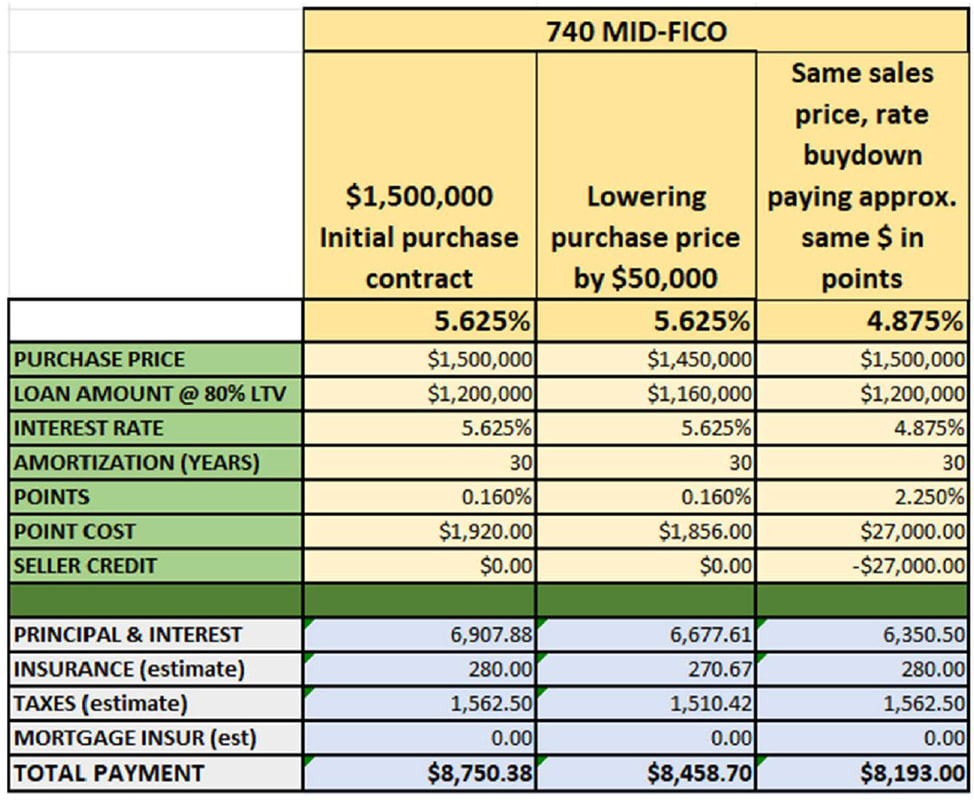
  • Lower purchase price versus an interest rate buydown credit
  • How to win a multiple offer buyer competition with an interest rate buydown
  • How to reduce seller capital gain exposure with an interest rate buydown credit
  • How to increase buyer income tax deduction with an interest rate buydown
Create buyer competition when selling your home
  • How to create buyer competition marketing your home with an interest rate buydown credit
Creative financing options to buy your next home before selling your current home
  • Home Equity Line of Credit (Heloc) loans
  • Cross collateralization loans
  • Private (Hard) Money loans
Local Real Estate Market Trend Forecast - 2023
  • Home loan interest rates
  • Supply of available homes for sale

Seating is limited - register now while tickets are still available!
​Click on this link for tickets

 
RSVP today to get this valuable information!
Tickets are $20 each - includes a copy of the book
"How to Get the Best Deal When Buying or Selling Your Home"
 
Share this with anyone you know who is planning to buy their next home.
 
Saturday, January 14, 2023 - 9:30 am to 11:30 am 
Wednesday, January 18, 2023 - 3:30 pm to 5:30 pm

Heather Farm Community Center - 301 North San Carlos Drive, Walnut Creek

Presented by
Bill Freeborn, Vice President of Mortgage Lending - OriginPoint
NMLS 1953091
Pete Sabine, Real Estate Consultant - Compass
DRE #00889760
Leslie Whitney, Real Estate Consultant - Compass
DRE #01950037

0 Comments
<<Previous
Forward>>

    Author

    Pete Sabine

    Archives

    September 2025
    April 2025
    January 2025
    November 2024
    October 2024
    September 2024
    January 2024
    November 2023
    September 2023
    August 2023
    June 2023
    May 2023
    April 2023
    March 2023
    January 2023
    December 2022
    November 2022
    October 2022
    August 2022
    July 2022
    June 2022
    May 2022
    March 2022
    October 2021
    July 2021
    June 2021
    April 2021
    February 2021
    January 2021
    December 2020
    November 2020

    Categories

    All
    Real Estate Advice And Tips

    RSS Feed

TEAM MODERN AGENT

Representing homeowners & buyers since 1985 with local real estate expertise and over 1000 successful real estate sale transactions, including Buyer Representation, Homeowner Representation, relocation transfers, Investor Representation and professional staging services.
Pete Sabine
Call or Text 
925-787-2548

​[email protected]
San Francisco
​East Bay
Picture
Picture
FACEBOOK ICON
INSTAGRAM ICON
LINKEDIN ICON
YOUTUBE ICON
CONNECT WITH PETE

OFFICE LOCATION

Picture
51 Moraga Way, Suite 8
Orinda, CA. 94563


QUICK LINKS

HOME

ABOUT OUR TEAM

BUYING

SELLING

COMMUNITIES

TIPS & TOOLS

CONTACT​


© PETESABINE.COM | PETE SABINE I DRE#00889760 | ​51 Moraga Way, CA 94563 | DUDUM REAL ESTATE GROUP I DRE #0882902
Site by WPF Creatives
  • ABOUT OUR TEAM
    • About Pete Sabine
    • Hire the Right Realtor
  • BUYING
    • Consultation and Preparation
    • Home Loan Resources
    • Finding Your Next Home
    • Transaction Management
    • Home Purchase Questionnaire
  • SELLING
    • CONSULTATION AND PREPARATION
    • PREMARKET PREP
    • PRICING STRATEGY
    • MARKETING PROGRAM
    • VIDEO MARKETING >
      • LIFE STYLE VIDEOS
    • STAGING
    • MARKETING UPDATE REPORTS
    • HOME SALE QUESTIONNAIRE
  • COMMUNITIES
    • ABOUT ALAMO
    • ABOUT ALHAMBRA VALLEY
    • ABOUT CLAYTON
    • ABOUT CONCORD
    • ABOUT DANVILLE
    • ABOUT LAFAYETTE
    • ABOUT LAMORINDA
    • ABOUT MARTINEZ
    • ABOUT MORAGA
    • ABOUT ORINDA
    • ABOUT PLEASANT HILL
    • ABOUT SAN RAMON
    • ABOUT WALNUT CREEK
    • COMMUNITY EVENTS >
      • National Night Out
      • Pleasant Hill Blues & Brews Festival
      • Pleasant Hill Summer Concert Series
      • Lindsey Wildlife Experience
      • CHRISTMAS HOLIDAY FUNDRAISER
      • Community Yard Sale Event
      • Home Buying Seminar
  • TIPS & TOOLS
    • REAL ESTATE PRO TIPS
    • Service Provider Directory
    • How to buy/sell book
  • CONTACT US